

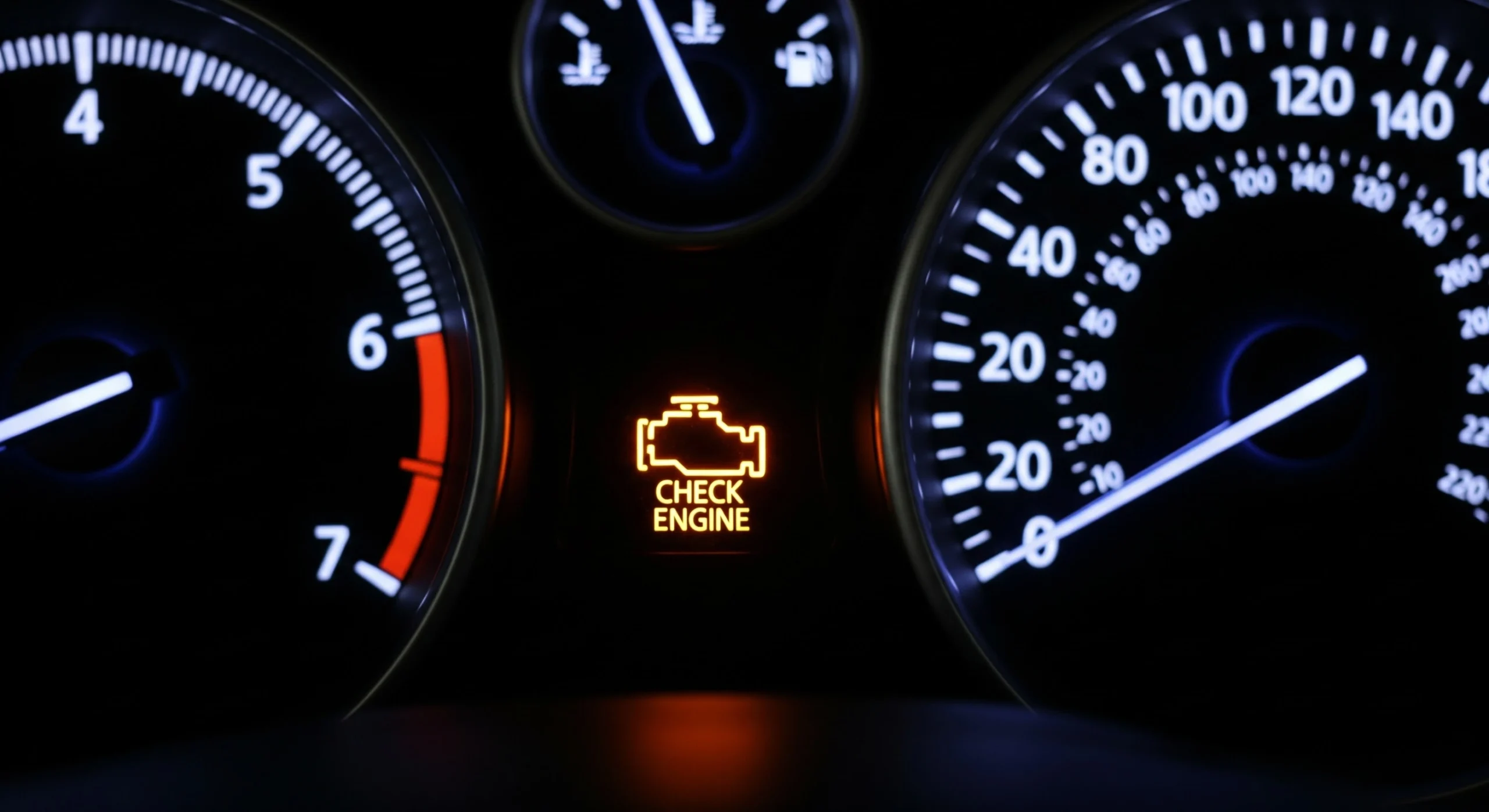
The dreaded check engine light. It pops on out of nowhere, glowing like your car just whispered, “We need to talk.” Instant panic. Is it serious? Is it expensive? Is today the day your car gives up on life?
Here’s the good news: it’s not magic, and it’s not always a disaster. This guide breaks down why that light turns on, what it’s actually trying to tell you, and what you can do—without freaking out—to keep driving with confidence.
Understanding Your Check Engine Light: What It Really Means
Think of the check engine light as your car’s way of texting you, “Something’s off.” Officially, it’s called the malfunction indicator lamp (MIL), and it’s part of a system called OBD-II that’s been in cars since 1996. Basically, your car is smarter than it looks.
Your car constantly checks hundreds of parts—engine, emissions, sensors, all of it. When something acts weird, it saves a secret error code and turns on the light.
One big rule to remember: steady light = calm but don’t ignore it. Flashing light = pull over now. Flashing usually means serious misfires that can wreck expensive parts. Translation? Your car isn’t being dramatic—it’s begging for help.
- Read Also: Seasonal Car Maintenance Checklist: Prepping Your Car for US Weather
- Read Also: A Guide to Car Tire Care: Rotation, Alignment, and Pressure
The Top 10 Most Common Causes of Check Engine Light Activation
1. Loose or Faulty Gas Cap
The Problem:
I know this sounds ridiculous, but hear me out—I’ve seen grown adults panic over a check engine light… caused by a gas cap. Yep. If it’s loose, cracked, or missing, fuel vapors escape and your car’s EVAP system freaks out.
The Solution:
Twist the gas cap until it clicks like you’re locking in a combo. No clicks? Replace it. It’s cheap—about the cost of a pizza—and after a few drives, the light usually goes away. Sometimes your car just wants you to tighten the lid.
2. Failing Oxygen Sensors
The Problem:
Oxygen sensors are like your engine’s nose—they sniff the exhaust and tell the car how much fuel to use. When they get old or dirty, they lie. That means worse gas mileage and a very unhappy engine. This is a super common reason the light turns on.
The Solution:
These sensors usually wear out after a lot of miles. Ignore them, and your car burns fuel like it’s mad at you—and you risk frying the catalytic converter (very expensive, very bad). Replacing them isn’t cheap, but it saves way more money in the long run.
3. Catalytic Converter Failure
The Problem:
This is the big, scary one. The catalytic converter is your car’s pollution superhero—it cleans up nasty gases before they exit the exhaust. When it fails, your car feels weak, burns more fuel, and smells… not great. Most of the time, it dies because other problems were ignored first.
The Solution:
Replacing it can hurt your wallet—like “ouch” levels. But here’s the plot twist: many are covered under emissions warranties, so you might not pay a dime. The real secret? Fix small issues early so this part never gets mad in the first place.
4. Mass Airflow Sensor Malfunction
The Problem:
The mass airflow sensor tells your engine how much air it’s breathing. If it gets dirty, your engine gets confused—rough idling, bad mileage, weird throttle vibes. It’s like trying to run while breathing through a straw.
The Solution:
Sometimes all it needs is a quick cleaning (cheap and easy). If it’s truly broken, replacement costs more but fixes everything fast. Want to avoid this drama? Change your air filter regularly—your engine likes clean air just like you do.
5. Spark Plug or Ignition Coil Issues
The Problem:
Spark plugs are the tiny sparks that make your engine go boom (the good kind). Ignition coils give them the power to do it. When these wear out, your engine misfires, shakes, feels weak, and drinks fuel like it’s stressed. I’ve driven cars that felt like they were coughing—this is usually why.
The Solution:
Spark plugs wear out. It’s normal. Replacing them on time is way cheaper than ignoring them and breaking bigger stuff. Coils cost more, but fixing them early keeps your engine smooth, happy, and not embarrassing at stoplights.
6. EVAP System Leaks
The Problem:
Your EVAP system is basically a maze of hoses that traps fuel vapors. When one cracks or pops loose, your car smells it and flips on the check engine light. Nothing explodes—but your car will snitch on itself.
The Solution:
Finding the leak usually means a smoke test (yes, mechanics literally pump smoke into your car). Fixes can be cheap or kinda painful, depending on what’s broken. Moral of the story: little rubber hoses matter more than you think.
7. Thermostat Malfunction
The Problem:
Your thermostat is like your engine’s body temperature controller. If it’s stuck open, the engine stays too cold. Stuck closed? It overheats—fast. Either way, your car knows something’s wrong and throws on the check engine light.
The Solution:
This is a pretty chill fix compared to others. Replacing the thermostat isn’t crazy expensive, and it saves your engine from serious damage. Think of it as fixing a fever before it turns into a hospital visit.
8. Battery or Charging System Issues
The Problem:
Sometimes your car isn’t broken—it’s just tired. A weak battery, crusty terminals, or a failing alternator can mess with electronics and confuse the car’s computer, which then hits you with a check engine light for no good reason.
The Solution:
Clean the battery terminals, check the connections, and get the battery tested (often free). If something’s bad, replacing it brings your car back to life—like coffee for machines.
9. EGR Valve Problems
The Problem:
The EGR valve is your engine’s way of being eco-friendly—it sends some exhaust back in to cool things down. But when it gets clogged with carbon gunk, your engine starts running rough, like it’s trying to breathe through a dirty mask.
The Solution:
Sometimes a good cleaning fixes it and saves you cash. If it’s totally done, replacement costs more—but fixing it brings your smooth idle back. Clean fuel and regular maintenance keep this part from getting grumpy.
10. Vacuum Leaks
The Problem:
Your engine uses a bunch of rubber hoses to “sip” air the right way. Over time, those hoses crack or pop loose, and suddenly the engine is confused. You’ll feel shaking, hesitation, or even hear a weird hissing sound—like a snake under the hood.
The Solution:
Some leaks are cheap and easy—just a new hose. Others take more detective work. Either way, fixing vacuum leaks makes your car run smoother almost instantly, and that’s always a win.
What To Do When Your Check Engine Light Comes On
When that little amber light shows up, here’s your game plan—no stress, no drama:
- Don’t panic – If it’s not flashing and the car feels normal, relax. Your car isn’t about to explode. It’s just asking for attention.
- Check the obvious – Seriously, start with the gas cap. I’ve seen this light ruin people’s mornings over one loose twist.
- Notice the vibes – Is the car shaking, sounding weird, or feeling weak? Your car talks—you just have to listen.
- Read the codes – Auto parts stores do this for free, or grab a cheap scanner and feel like a car wizard.
- Look up the code – The internet speaks fluent car. Those codes tell you exactly what your engine is complaining about.
- Decide your move – Some fixes can wait. Others need a mechanic ASAP. Knowing the difference saves money.
- Don’t ignore it – Ever. That light is like a warning text. Ghost it, and things get expensive fast.
The Cost of Ignoring Your Check Engine Light
Here’s the hard truth: ignoring the light almost always costs more. What starts as a small, boring fix can snowball into a huge, wallet-crushing repair. Fix it early, and you save hundreds—maybe thousands. Plus, if your car needs emissions testing, that glowing light is an automatic fail. No pass, no registration, no driving.
Prevention: Keeping Your Check Engine Light Off
Want to avoid the whole mess? Treat your car right:
- Follow the maintenance schedule like it’s homework
- Use decent fuel and the right oil (your engine can tell the difference)
- Change air filters so your engine can breathe
- Fix small stuff before it turns into big stuff
- Replace spark plugs on time
- Check fluids—low levels cause big problems
Take care of your car, and it’ll take care of you. Ignore it, and it’ll absolutely snitch on you with that light.
- Read Also: How to Protect Your Car’s Paint from Sun and Salt
- Read Also: Car Brake Health 101: Signs You Need a Replacement
Conclusion: Taking Control of Your Vehicle’s Health
Think of the check engine light as your car tapping you on the shoulder—not screaming, not attacking, just saying, “Hey, help me out.” It’s there to warn you early, before small problems turn into total disasters.
Yeah, cars are complicated. But not every warning means a mechanic bill the size of a phone book. Sometimes it’s a five-second fix. Other times, it’s a sign to book an appointment and save yourself from bigger pain later.
If you listen, act early, and take care of basic maintenance, that light loses its power to scare you. It’s not your enemy—it’s your car trying to stay alive. Treat it right, and it’ll keep you rolling for a long time.