

Trading in your old car when buying a new one sounds super easy—just show up, hand over your old ride, and drive off in something shiny. But here’s the truth: most people get ripped off without even knowing it. Seriously, hundreds or even thousands of dollars can slip right through your fingers if you don’t know how to fight for your car’s value.
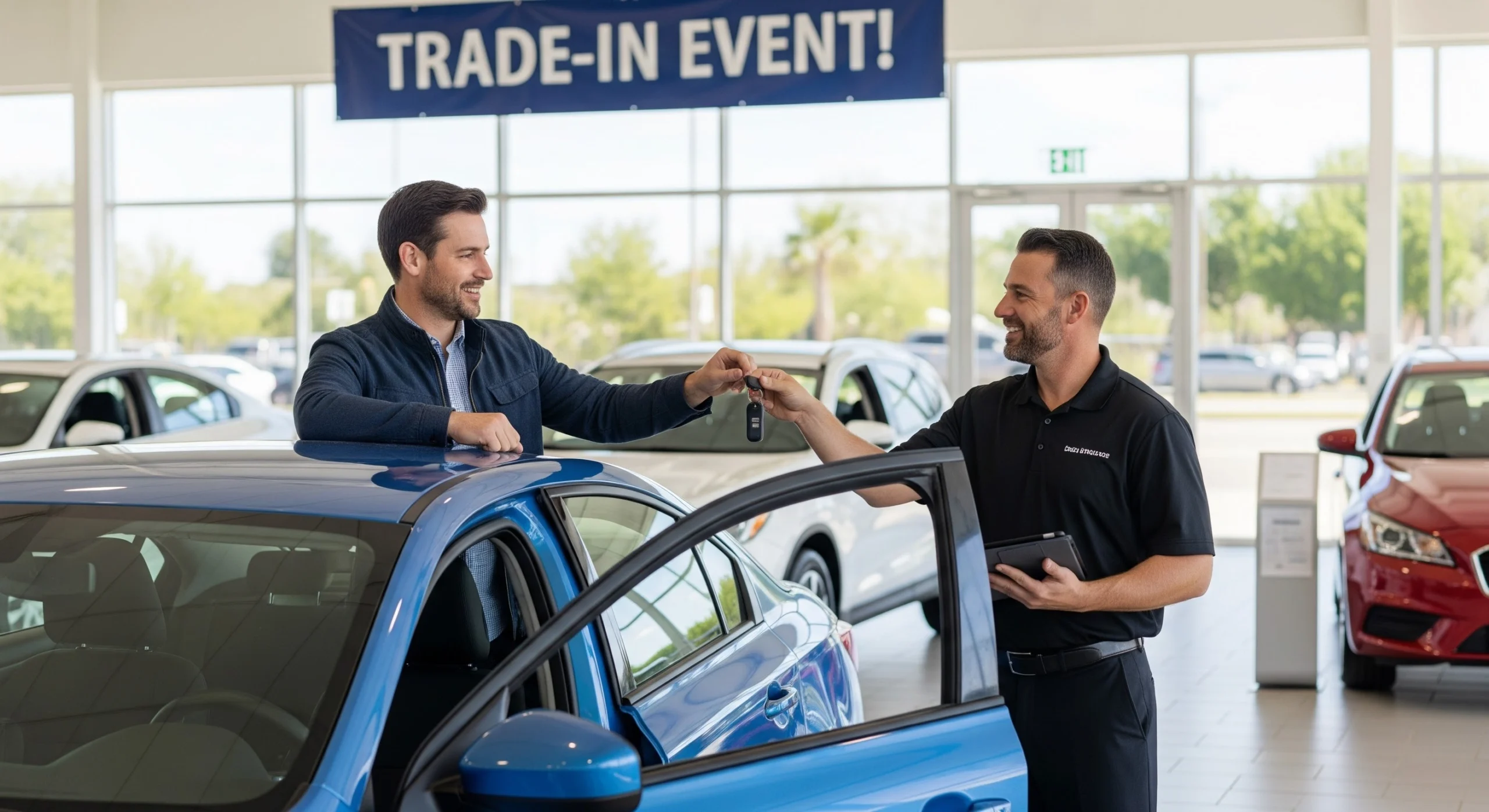
Understanding the Dealership’s Perspective
Here’s the deal—dealerships aren’t just buying your car because they like it. Nope. They’re planning to fix it up, show it off, and sell it for way more than they paid. Think of it like buying an old video game, cleaning it up, and selling it online for double. Dealers aim for wholesale prices, which are way lower than what your car is actually worth.
The average dealership makes 10–25% extra when they sell a used car—that’s their profit for cleaning, marketing, and keeping the lights on. Knowing this helps you see where the wiggle room is when you negotiate.
And here’s a classic trick: dealerships sometimes lowball your trade-in to make it look like you’re getting a bigger discount on the new car. Sneaky, right? Smart negotiators separate the trade-in from the new car deal—like having two separate games going at the same time—so they don’t get played.
- Read Also: The 20/4/10 Rule: How Much Car Can You Actually Afford?
- Read Also: Leasing vs. Buying in 2026: Analyzing the Current Market
Research Your Vehicle’s True Market Value
Knowledge is your secret weapon. Before you even roll onto a dealership lot, know what your car is really worth. Think of it like studying for a big test—you wouldn’t walk in clueless, right?
Check out these top tools:
- Kelley Blue Book (KBB): Gives trade-in and private party values based on your car’s age, mileage, condition, and location. It’s like having a cheat sheet for your car.
- Edmunds: Offers regional market data and a “True Market Value” calculation. Basically, it tells you what people are actually paying nearby.
- NADA Guides: Dealers often use this one. It shows both wholesale and retail prices, so you see the full picture.
Don’t pick just one. Cross-check all three. Research like this can score you about 17% more cash than flying blind. That’s like finding an extra $1,700 in your old car if it’s worth $10k—cha-ching!
Document Your Vehicle’s Condition Thoroughly
Want to level up your trade-in game? Documentation is your secret weapon. The more proof you have, the more serious—and cash-worthy—you look. Think of it like showing off your Pokémon card collection: the rarer and more complete, the better the trade.
Make a killer portfolio:
- Service Records: Oil changes, tire rotations, brake jobs—show them you’ve been a responsible owner. Cars with records sell for 5–10% more.
- Photos: Snap the exterior, interior, engine, trunk, and any cool upgrades. Include tiny flaws—honesty scores points.
- Upgrades & Receipts: Wheels, tech, or sound systems? Show proof of quality.
- Inspections & Emissions: Prove your car is safe and legal.
- Car History Reports: CarFax or AutoCheck showing no accidents or damage = instant trust.
Documentation screams: “I’m organized, responsible, and worth every penny!”
Timing Your Trade-In Strategically
When you trade in your car can make a huge difference. Dealers have quotas, seasonal demands, and new model cycles—knowing this is like having cheat codes.
- End-of-month, quarter, or year: Salespeople are desperate to hit targets. Your trade-in suddenly looks extra valuable.
- Seasonal timing: Convertibles shine in spring/summer; SUVs peak in fall/winter. Selling at the right season can boost offers 8–15%.
- Model year changes: When new models drop, dealers want old ones gone—perfect time to trade in.
Master the Separation Strategy
Never talk trade-in and new car price at the same time. Negotiate the new car like you’re paying cash. Once that’s set, then bring up your trade-in. Bundling them usually costs you $1,200 extra.
Show your research and proof: “Based on KBB, Edmunds, and NADA, plus my car’s perfect service history, I’m expecting $X.” Confidence is your superpower.
Leverage Competition to Your Advantage
Dealers hate losing—use that! Hit up 3–5 dealerships for trade-in appraisals and let them compete for your car. Bring your documentation every time and get offers in writing.
Check out CarMax, Carvana, Vroom, or TrueCar too. Even if their offers aren’t top dollar, they set a baseline: “CarMax gave me $X—can you beat it?” Multiple appraisals can boost your final offer by 12%—that’s like finding extra cash in your wallet.
Recognize and Counter Common Tricks
Dealers have classic moves:
- Lowball then nickel-and-dime: Don’t fall for tiny increases—stick to your research.
- Wholesale excuse: Ask why they can’t sell it on their lot—push for retail value.
- Exaggerated wear: Show your photos and records—acknowledge small scratches but prove your car is worth every penny.
Competition + knowledge = serious negotiating power.
Know When to Walk Away
Your ultimate power move? Walking away. If dealers know you’ll accept anything, they won’t budge.
Set your walkaway number before you start. If your car is worth $18–20k, decide you won’t take less than $17,500. Stick to it. Walk out politely if needed—dealers often call back within a day or two with a better offer.
Remember, you can always sell privately. It takes more effort, but you can make 10–20% more. Use it as leverage: “I could sell it myself, but I’m willing to trade-in for the right price.”
- Read Also: Hidden Costs of Car Ownership: Insurance, Maintenance, and Beyond
- Read Also: CPO vs. Used: Is a Certified Pre-Owned Vehicle Worth the Premium?
Conclusion: Confidence Comes from Preparation
Negotiating isn’t about being pushy—it’s about knowledge, timing, and proof. Research values, document your car, hit the right season, and play smart. Being prepared can score you thousands of extra dollars—enough to upgrade your new car or add cool extras.
Approach your next trade-in negotiation with confidence, armed with research, documentation, and the proven strategies outlined in this guide. Remember that dealerships are accustomed to negotiating and respect customers who come prepared and professional. Your vehicle has real value—make sure you capture every dollar of it.