

The EV revolution isn’t some sci-fi future anymore—it’s already here, and it’s rolling quietly down your street. With over a million electric cars cruising around the U.S., almost everyone asks the same thing first: “Okay, but how much does it actually cost to charge one at home?” Trust me, that question hits every new EV owner right after the first wow-moment of instant acceleration.
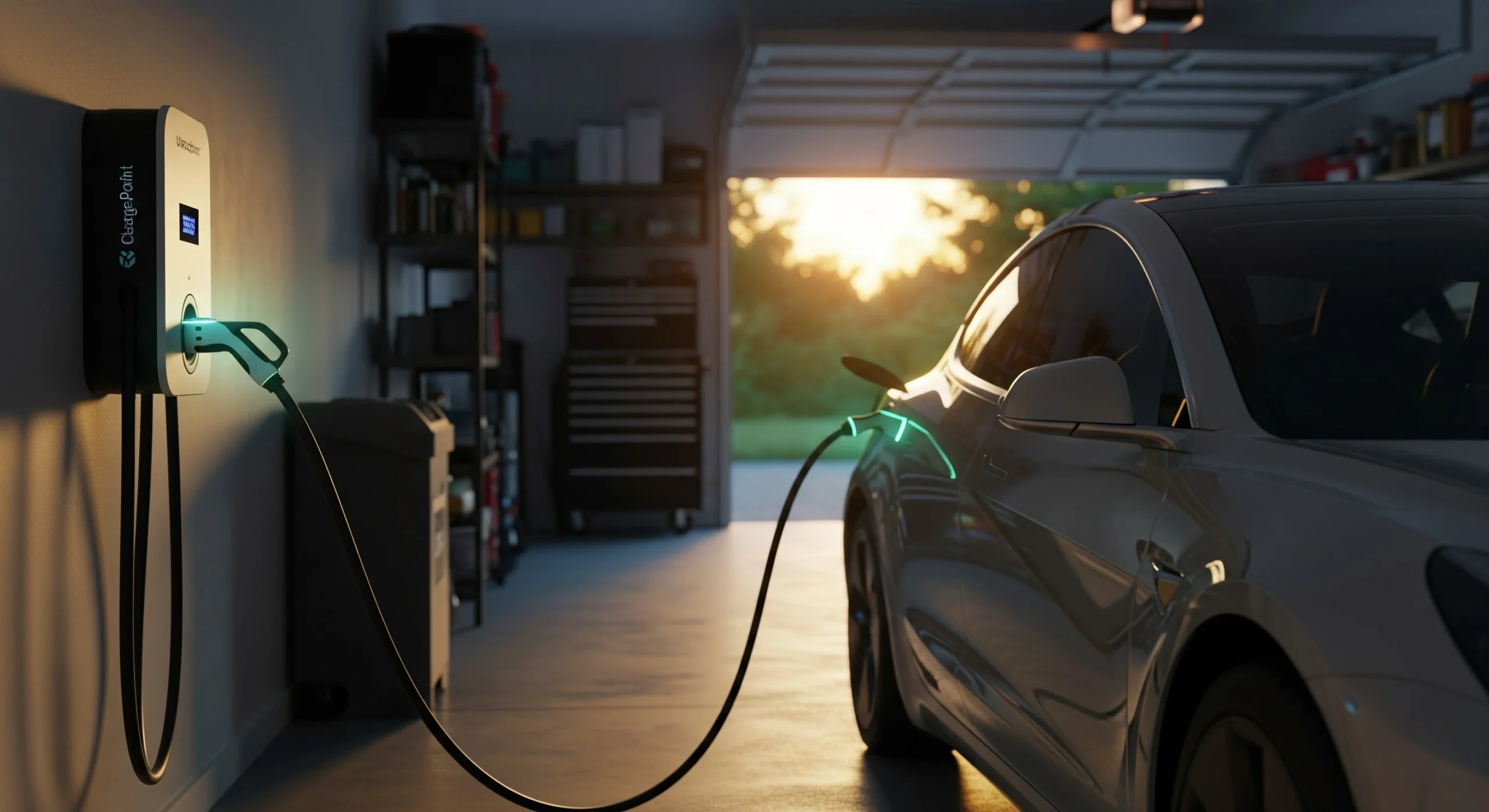
Understanding the Basics: EV Charging Levels
Before we talk money, let’s get one thing straight—not all EV charging is the same. Think of charging levels like video game difficulty modes: easy, normal, and “don’t try this at home.” There are three main types, and each one charges at a very different speed.
Level 1
This uses a regular wall outlet—the same one you plug your phone or bedside lamp into. Sounds easy, right? It is… but it’s glacially slow. You’ll get about 3–5 miles of range per hour. That’s like charging your car with a spoon. It technically works, but unless you barely drive at all, Level 1 will test your patience fast.
Level 2
This is where things get exciting. Level 2 uses a 240-volt outlet, like the one your dryer or oven uses. This is the gold standard for home charging. You’ll gain around 25–30 miles of range per hour, which means your car can go from empty to full while you sleep. Most EV owners choose Level 2 because it’s fast, reliable, and fits perfectly into everyday life.
Level 3 or DC Fast Charging
This is the superhero-level charger you see on highways and at big charging stations. It’s insanely powerful—and totally unrealistic for homes. Installing one can cost more than a house down payment (we’re talking $50,000+). Awesome for road trips, not for your garage.
For home charging, Level 2 is the clear winner. It’s fast enough to be convenient, affordable enough to make sense, and honestly? It just feels right for daily EV life.
- Read Also: What Happens to Old EV Batteries? The Future of US Recycling
- Read Also: Top Affordable EVs for the US Market in 2026
The Real Costs: What You’ll Pay for Home EV Charging Installation
Equipment Costs
First up is the charger itself—basically your car’s personal fuel pump at home. A good Level 2 charger usually costs between $300 and $1,200. Solid, no-nonsense models start around $400–$500 and do the job safely. Spend a bit more ($600–$800) and you get cool stuff like WiFi, apps, and smart scheduling so your car charges while you sleep and electricity is cheaper. The fancy $900+ chargers? Longer cables, tougher builds, and brand-name flex (looking at you, Tesla Wall Connector).
Installation Costs
Here’s the part where you don’t play electrician. This is serious power, so you’ll need a licensed pro. Most installations land between $750 and $2,500, depending on your house. Here’s what influences the final price:
- Electrical panel capacity: Most Level 2 chargers require a 40-50 amp dedicated circuit. If your panel is already at capacity, you may need a panel upgrade costing $1,500-$3,000.
- Distance from the panel: Installations within 10-20 feet of the panel are typically cheaper, while longer runs increase material and labor costs.
- Wall construction and obstacles: Exterior installations on vinyl or wood siding are generally less expensive than installations requiring concrete drilling.
- Permit fees: Most jurisdictions require electrical permits for EV charger installation, typically costing $50-$200.
Total Upfront Investment
Put it all together, and most people spend about $1,200 to $3,500 to charge at home. Yeah, it’s not pocket change—but once you compare it to years of gas station visits, it starts feeling like a smart, future-proof move.
This is where EVs really show off. Charging at home is way cheaper than buying gas, and once you see the numbers, it’s hard to unsee them. On average, electricity costs about $0.16 per kWh in the U.S.
Here’s the easy math: charging a normal EV from empty to full costs about $12 and gets you roughly 250–300 miles. That’s around 4–5 cents per mile. A gas car? About 12 cents per mile. That’s basically paying triple just to hear engine noise.
Drive about 12,000 miles a year and you’ll spend roughly $500–$600 on electricity instead of around $1,400 on gas. That’s up to $900 saved every year—money you could spend on games, trips, or literally anything more fun than fuel.
Time-of-Use Rates: Maximizing Your Savings
Here’s the cheat code: charge at night. Many power companies offer cheaper electricity while everyone’s asleep, sometimes as low as $0.06 per kWh. Smart chargers handle this automatically, so you plug in, go to bed, and wake up to a full car and a smaller bill. Do this long-term, and you can cut charging costs by up to 50%. That’s EV ownership playing on easy mode.
Incentives and Rebates: Reducing Your Installation Costs
Here’s the fun part—free (or almost free) money. Governments want you to drive electric, so they help pay for your home charger.
Federal Tax Credit
The federal government gives you back 30% of what you spend on buying and installing a home charger, up to $1,000. So if your setup costs $2,500, boom—you could get $750 back. It’s like buying a charger and the government saying, “Nice choice, here’s a refund.” This deal runs all the way through 2032.
State and Local Incentives
Then come the bonus levels. Many states and utility companies stack extra rebates on top. Some states offer $1,000 or more, and power companies often throw in another $500–$1,000 just for charging at home. That’s real money off the bill.
The Installation Process: What to Expect
Getting a home EV charger installed isn’t scary—it’s more like ordering pizza and waiting for delivery, just with wires.
Step 1: Site Assessment
An electrician checks out your house, your electrical panel, and where the charger should go. This usually takes under an hour and is sometimes free (or cheap). Think of it as a quick “can your house handle this?” check.
Step 2: Permit Application
Paperwork time. Your electrician handles permits with the city, which can take a week or two. Boring? Yes. Necessary? Also yes.
Step 3: Installation Day
This is the exciting part. In about 4–8 hours, the electrician installs the circuit, mounts the charger, and makes sure everything works. Most of the time, it’s all done in one day.
Step 4: Inspection and Activation
A final safety check happens, and once it’s approved, you’re officially ready to plug in and charge at home. Congrats—you’ve leveled up to real EV owner status.
Choosing the Right Charger for Your Needs
Picking a home EV charger is like choosing a phone charger—you want it fast enough, reliable, and not annoying to use every day. Here’s what actually matters:
- Amperage and charging speed: More amps = faster charging. A basic charger adds about 25 miles per hour, while faster ones can push close to 40.
- Smart features: WiFi chargers let you track energy, schedule charging, and feel futuristic. Cool? Yes. Required? Nope. Basic chargers work just fine and cost less.
- Cable length: Measure first. Short cables are neat, long cables are flexible. Nothing’s worse than realizing your charger doesn’t quite reach your car.
- Compatibility: Most chargers work with almost every EV. Tesla owners can use Tesla chargers or adapters—no stress there.
- Weatherproofing: Charging outside? Make sure it’s built to survive rain, heat, and angry weather.
Renting vs. Owning: Charging Solutions for Every Situation
Don’t own a house? No problem. Renters can still charge at home. Talk to your landlord—many say yes, especially if you help cover the cost or local rules support EV chargers. There are also portable Level 2 chargers that plug into dryer outlets, so you can unplug them and take them with you when you move. Apartment life? Ask about shared chargers or push management to install them—cities are making this easier every year.
- Read Also: The State of Public Charging: A Cross-Country Reality Check
- Read Also: Hybrid vs Plug-in Hybrid (PHEV): Which is Better for Your Commute?
Making the Switch: Your Path to Home EV Charging
Setting up home charging is like unlocking the best EV perk. Yes, it costs money upfront, but incentives can cut the price almost in half, and fuel savings usually pay it back in just a couple of years. After that, it’s pure win.
Waking up every day with a full battery, saving cash, and helping the planet? That’s a triple win. Do a little research, pick the right charger, call a licensed electrician, and you’re set. The electric future isn’t coming someday—it’s already here, and it starts right in your garage.