

The modern car isn’t just a way to get from point A to B anymore—it’s basically a laptop on wheels. Every time you start the engine, your car is watching, listening, and taking notes. Speed, location, driving style—yep, it’s all data. These features can be awesome (hello, crash alerts and smart navigation), but they also raise a big, uncomfortable question: who else is seeing all this?
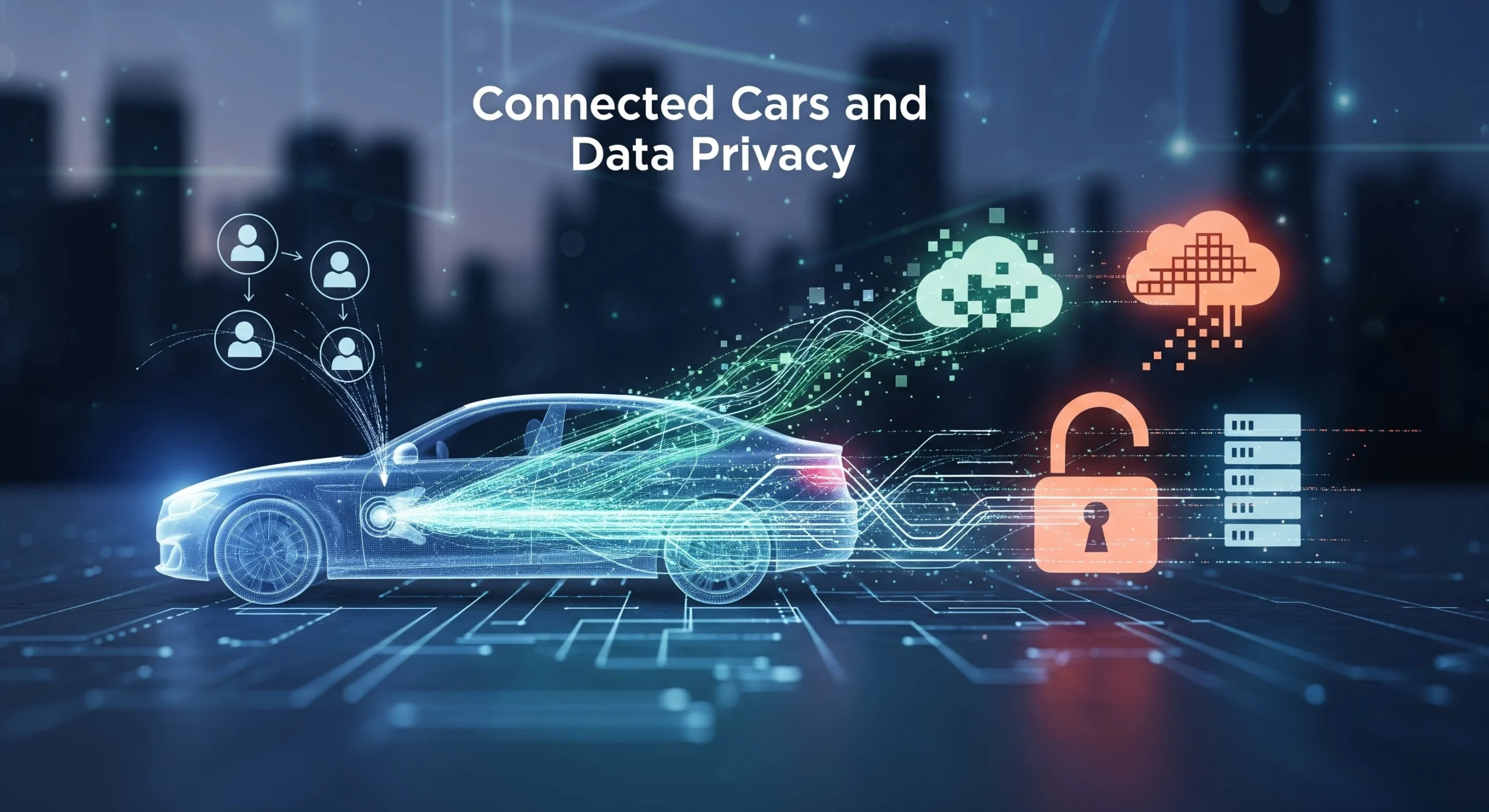
The Rise of the Connected Vehicle
Connected cars are exploding right now. They’re one of the fastest-growing parts of the Internet of Things, meaning your car is now part of the same club as smart fridges and doorbells. These vehicles talk constantly—to car companies, apps, insurers, and sometimes other cars—so you get cool stuff like live traffic, emergency help, and software updates without visiting a mechanic.
But here’s the trade-off. All that convenience leaves a digital trail that maps your life. Your car knows your routines better than some of your friends. Where you go. When you go. How you drive when you’re stressed. It’s powerful tech—but power always comes with consequences.
- Read Also: Advanced Driver-Assistance Systems (ADAS): What Every Buyer Should Know
- Read Also: Must-Have Car Gadgets of 2026: From Dash Cams to Smart Adapters
What Data Are Connected Cars Actually Collecting?
Short answer? A lot. Like, way more than most people realize. I once joked that my car knows me better than my math teacher—and honestly, I wasn’t wrong. If you want to protect your privacy, you first need to know what your car is quietly collecting every time you drive.
Location and Movement Data
Your car tracks where you go nonstop. Home, school, your friend’s house, that late-night snack run—logged. Over time, it can basically map your entire life and routines. Creepy? A little. Powerful? Definitely.
Driving Behavior and Performance Metrics
Your car judges how you drive. Speeding, hard braking, sharp turns—it sees all of it. Some insurance companies love this data because it lets them decide if you’re a “safe driver” or a walking accident waiting to happen.
Vehicle Diagnostics and Maintenance Information
Your car constantly checks its own health—engine, battery, tires, fuel use. That’s helpful, but it also creates a full record of how often and how hard you use your car.
In-Vehicle Communications and Entertainment
Connect your phone, and your car can see your contacts, texts, calls, music, and sometimes even record your voice. Yeah… awkward. Your car might know your playlist and your secrets.
Camera and Sensor Data
All those safety cameras? They’re watching the road—and everything on it. Cars, people, license plates, the whole scene. It’s like your car has eyes everywhere.
Who Has Access to Your Vehicle Data?
Here’s the part nobody tells you: the data your car collects doesn’t just chill inside the car. It goes on a little world tour. And most of the time, you didn’t even say yes.
Vehicle Manufacturers
Car companies are first in line. They use your data to improve cars, fix bugs, and add features—but let’s be real, they also make money off it. Your driving data can turn into marketing gold.
Insurance Companies
Insurers are watching how you drive, not just if you drive. Brake too hard? Speed too much? Some insurance plans literally score you like a video game… except the prize is your monthly bill.
Law Enforcement and Government Agencies
Yep, cops can ask for your car’s data. Location history and driving behavior have already been used in court cases. Your car can snitch—with receipts.
Third-Party Service Providers
Maps, music, traffic apps—those “helpful” features often come from outside companies. Each one may grab data under their own rules, turning your info into a messy sharing chain.
Data Brokers and Advertisers
This is the wild one. Your car data can end up with companies that sell behavior patterns for ads. It’s usually “anonymous,” but let’s be honest—anonymous doesn’t always mean untraceable.
The Privacy Implications and Risks
This is where things stop being “cool tech” and start being “wait… that’s kinda scary.”
Creating Detailed Profiles of Personal Behavior
When you mix location, driving style, and what you do inside the car, it paints a freakishly accurate picture of your life. Like, your car could guess where you’re sick, what you care about, or where you hang out—without you ever saying a word. That’s not a vibe.
Security Vulnerabilities and Data Breaches
Your car is online, which means hackers can come knocking. People have already proven cars can be hacked remotely. Worst case? Personal data gets leaked—or someone messes with the car itself. That’s not a glitch you want.
Lack of Transparency and Control
Most people have no idea this is happening. Privacy policies are long, confusing, and written like a legal spellbook. And even if you do know, opting out often means losing features you actually need. It’s a fake choice.
Potential for Discrimination and Manipulation
Your data can be used against you—higher insurance prices, sneaky personalized ads, or decisions made about you based on patterns, not facts. You’re getting judged by an algorithm, not a human.
Current Regulatory Landscape
The rules are… messy. In the U.S., laws are outdated and don’t fully cover modern car data. Some states try, but there’s no strong national rulebook.
In the EU, GDPR gives people way more power over their data—but even there, enforcing it is a constant battle.
Car companies promise to “self-regulate,” but let’s be honest—rules without consequences don’t hit very hard.
Protecting Your Privacy in a Connected Car
You’re not powerless here. You don’t need a tinfoil hat—just a little awareness and some smart moves.
Research Before You Buy
Before picking a car, treat it like an app download. Read what data it collects. Ask awkward questions at the dealership. If a car feels too connected, it probably is.
Review and Adjust Settings
Dig into the settings. Turn off stuff you don’t need—especially location tracking, voice recordings, and data sharing. Yeah, you might lose a feature or two, but privacy always costs a little convenience.
Limit Smartphone Integration
Plugging in your phone is like handing your car your diary. Use Bluetooth for music if you can and skip full access to contacts and messages unless you really need it.
Understand Your Rights
In some places, you can see what data companies have on you—or even tell them to delete it. Most people never use these rights. You should.
Use Privacy-Enhancing Tools
Offline maps, clearing stored data, and being intentional about what features you use all help. Small habits add up.
The Future of Vehicle Privacy
Cars are only getting smarter—and nosier. Future vehicles will talk to other cars, traffic lights, and entire cities. Cool for safety. Stressful for privacy.
Biometrics, driver monitoring, and hyper-personalized experiences mean cars won’t just know where you go—they’ll know how you feel while going there.
The line between your phone and your car is fading fast. Learning how to protect your data now is future-you doing future-you a huge favor.
- Read Also: The Rise of AI in Your Car: Next-Gen Voice Assistants
- Read Also: The Best 3-Row SUVs for Families in 2025
Conclusion
Connected cars are awesome—safer, smarter, and way more convenient. But let’s be real: they don’t come free. You’re often paying with your data, and most people don’t realize that when they sign the papers.
Your car knows a lot about you, and that info doesn’t stay private. It gets shared, sold, and analyzed in ways that may not help you at all. As cars get smarter, this only gets bigger—and ignoring it won’t make it go away.
This isn’t just on drivers. Car companies, lawmakers, and tech leaders need to step up with clearer rules, better security, and real privacy protections—not fine print nobody reads.
The future of cars is exciting, but it needs boundaries. Stay informed, tweak your settings, and don’t hand over your data without thinking. Innovation is great—but your personal life shouldn’t be riding shotgun without your permission.