

The automotive world has low-key leveled up. Cars used to just react—airbags pop, brakes lock, hope for the best. Now? Cars can think ahead. Advanced Driver-Assistance Systems (ADAS) are basically your car’s built-in co-pilot, helping you avoid crashes before they even happen. If you’re buying a car—now or someday—this stuff matters more than flashy rims or a big screen.
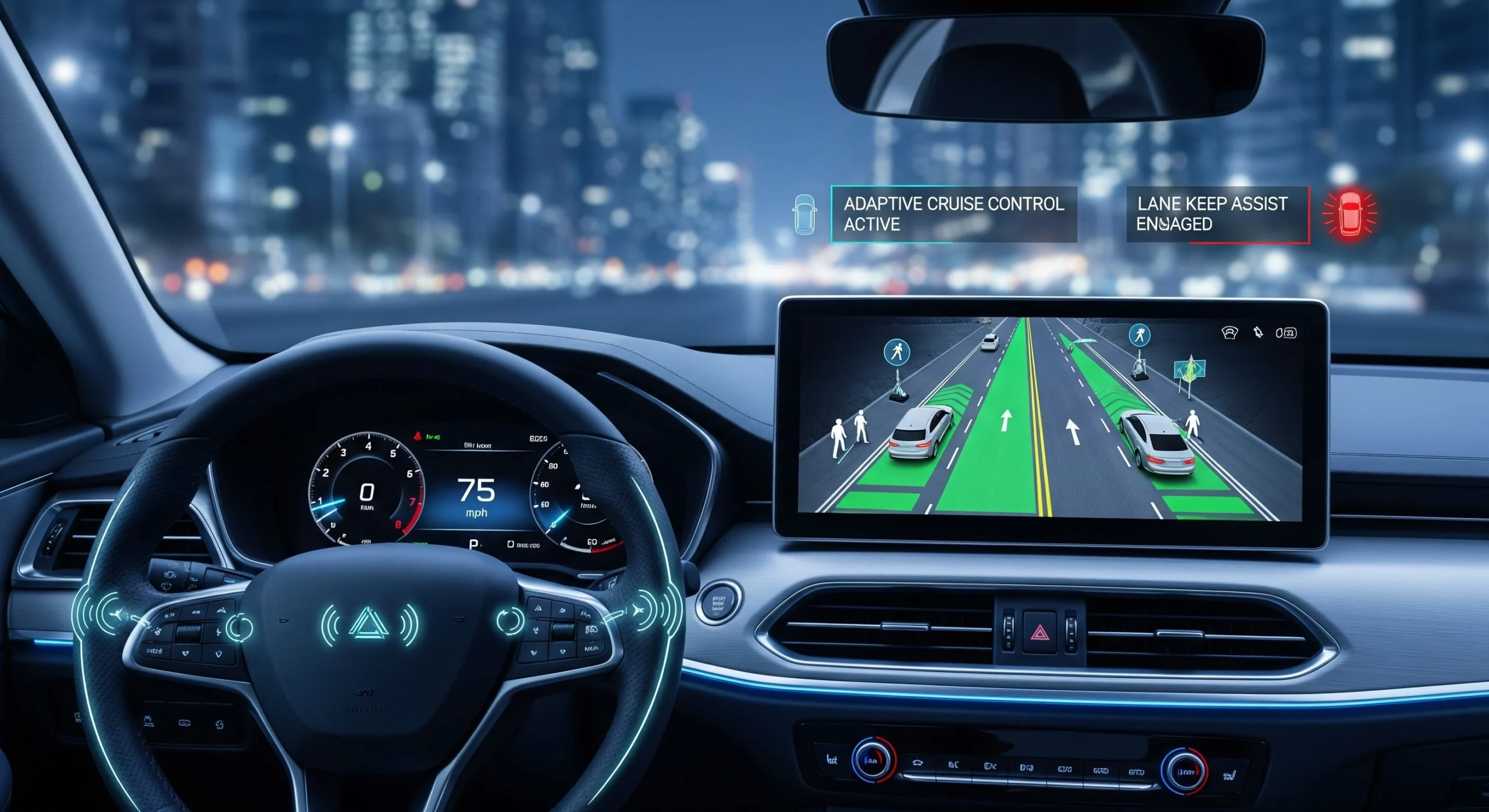
Understanding ADAS: The Foundation of Modern Vehicle Safety
Think of ADAS as your car having extra eyes, ears, and a tiny brain. It uses cameras, radar, and sensors to watch the road 24/7, spot danger, and either warn you or step in when you mess up (because yeah, humans mess up).
Real talk: systems like automatic emergency braking cut rear-end crashes by about 50%. That’s huge. That’s the difference between “oops” and “ambulance.”
All these sensors work together like a squad—front, back, sides—constantly scanning and making split-second decisions. It’s not self-driving yet, but it’s definitely your car saying, “Relax, I got you.”
- Read Also: Must-Have Car Gadgets of 2026: From Dash Cams to Smart Adapters
- Read Also: Connected Cars and Data Privacy: What is Your Vehicle Tracking?
Essential ADAS Features Every Buyer Should Consider
Alright, let me break this down like I’m talking to you in the passenger seat. These ADAS features aren’t “extra.” They’re the MVPs of modern driving.
Adaptive Cruise Control
This is cruise control that actually has a brain. It keeps your speed and automatically slows down when traffic gets annoying. On long highway drives, it’s like your car saying, “Chill, I’ll handle the boring part.”
Automatic Emergency Braking
This one’s a straight-up hero. If you don’t hit the brakes in time, the car does it for you. Studies show it cuts crashes and insurance claims big time—which basically means fewer “oh no” moments and fewer expensive repairs.
Lane Departure Warning & Lane Keep Assist
Ever drift a little because you blinked too long? Same. These systems notice and either warn you or gently nudge the car back into the lane. It’s like your car tapping your shoulder and saying, “Hey, focus.”
Blind Spot Monitoring
That moment when you think the lane is clear and—surprise—there’s a car? Yeah, this stops that. Little lights or beeps warn you when someone’s hiding in your blind spot.
Rear Cross-Traffic Alert
Backing out of a parking space can feel like a jump scare. This feature watches behind you and warns if a car or person is coming, saving you from awkward (and expensive) parking lot accidents.
How ADAS Levels Correspond to Automation
Quick reality check: your car is not a robot chauffeur. The auto industry ranks automation from Level 0 (all you, no help) to Level 5 (car does literally everything). Right now, most cars sit at Level 1 or Level 2.
- Level 1 is like training wheels—things like adaptive cruise control or lane assist, but you’re still fully in charge.
- Level 2 is cooler: the car can steer and control speed at the same time (think Autopilot or Super Cruise).
Sounds futuristic, but don’t get it twisted—you still have to pay attention. People who forget that? Yeah… crashes happen. The tech helps, but it doesn’t replace your brain.
The Real-World Benefits of ADAS Technology
Here’s where ADAS actually slaps.
- First: less fatigue. Long drives suck way less when the car helps handle speed and lanes. You arrive feeling human, not fried.
- Second: cheaper insurance. Some companies knock 5–20% off your bill just for having safety tech. That’s real money.
- Third: better resale value. Cars with ADAS age better. When you sell it later, buyers are way more interested—and willing to pay more.
Important Considerations and Limitations
Okay, real talk—ADAS is awesome, but it’s not invincible. Bad weather like heavy rain, fog, or snow can mess with cameras and sensors. Sometimes the system just taps out and says, “Nah, you’re on your own.” Totally normal, but you need to know that going in.
Also, these systems need maintenance. Even a small fender bender or windshield swap can mean recalibrating sensors—and yeah, that can cost a few hundred bucks. Not fun, but necessary.
And yes, sometimes the car overreacts. Random beeps. Weird warnings. Occasional “bro, relax” moments. You should always know how to override the system and stay in control.
Evaluating ADAS Options When Shopping for a Vehicle
Don’t just buy a car because the brochure flexes “advanced safety.” Think about how you actually drive. City driving? Parking tech and rear cross-traffic alerts matter. Highway life? Adaptive cruise and lane assist are clutch.
Test drive with the features ON. If the alerts annoy you in 10 minutes, imagine living with them for years. Some systems feel smooth and smart—others feel like a nervous backseat driver.
Do your homework. Groups like IIHS and Consumer Reports rate these systems, and some brands are way better than others.
Last thing: watch the pricing. Carmakers love bundling safety tech with fancy stuff you don’t need. Try to get the safety features without paying extra for fluff. Best ADAS setup? One that keeps you safe without draining your wallet.
The Future of ADAS and What It Means for Buyers
Here’s the big picture: ADAS isn’t slowing down—it’s about to be everywhere. Governments are already pushing for features like automatic emergency braking to be standard, so in a few years, not having ADAS will feel like buying a phone without a camera.
Next up is some sci-fi-level stuff. Cars talking to other cars. Sharing info about accidents, traffic, or slick roads before you even see them. Smarter AI that understands chaos, not just perfect situations. All of this means safer roads and fewer “that could’ve been bad” moments.
If you buy a car with solid ADAS now, you’re future-proofing. Safer today, higher resale value tomorrow. That’s a win-win.
- Read Also: The Rise of AI in Your Car: Next-Gen Voice Assistants
- Read Also: The Best 3-Row SUVs for Families in 2025
Making Your Decision
Let’s be clear: ADAS is one of the biggest safety upgrades cars have ever gotten. Used right, it cuts crashes, lowers stress, and keeps people alive. That’s not hype—that’s facts.
When shopping, pick features that match how you drive. Ask questions. Make dealers show you how stuff works. Take long test drives and see how it feels in real life, not just on paper.
But don’t get lazy—ADAS helps you, it doesn’t replace you. You still need eyes on the road and hands on the wheel.